

Ayurvedic Ear Drops for the Digital Age: Complete Guide to Karn Shakti
Your ears weren’t designed for eight hours of earbuds. Yet here we are—calls back-to-back, headphones during commutes, wireless earphones for focus while working. The result? A quiet epidemic of ringing ears, stubborn dryness, and that unsettling fullness that just won’t go away.
Walk into any clinic today and you’ll find shelves lined with antibiotic drops, steroid solutions, and chemical wax softeners. They work fast, sure, but they don’t ask why your ears are struggling in the first place.
Ayurveda asks a different question: what if your ears aren’t infected, just exhausted? In ancient Ayurvedic texts, the ear is described as the seat of Vata (the air and space element that governs movement, sound, and dryness in the body). When Vata spirals out of balance from relentless noise, stress, and artificial environments, your ears don’t just hear poorly—they ache, itch, ring, and dry out.
They’re calling for nourishment, not medication. That’s where Karn Shakti Drops comes in—a herbal ear drop designed for modern life, offering gentle daily care without the heaviness or mess of traditional oils.
The Modern Ear Crisis: Digital Damage to Shravana
Shravana—the Ayurvedic term for the sense of hearing—was never meant to process twelve-hour workdays through foam tips. But that’s exactly what we’re asking our ears to do. Whether it’s back-to-back virtual meetings, podcast binges on your commute, or gaming sessions that stretch past midnight, your ears are working overtime.
The problem isn’t just volume. It’s the relentless, unnatural pressure on Prana Vayu (the sub-type of Vata that governs sensory input and nervous system communication). When Prana Vayu gets disturbed, it doesn’t stay quiet—it shows up as Karnanada (the classical Ayurvedic term for tinnitus or ringing in the ears), persistent itching, a sensation of blockage, or that maddening dryness that makes you want to dig into your ear canal.
Modern urban life piles on the damage:
- Audio overload from headphones and earbuds: Whether you’re on calls all day, listening to music during your workout, or gaming with a headset, your ear canals are trapped in a cycle of pressure, heat, and moisture imbalance that aggravates Vata.
- Air conditioning and frequent flights: Recirculated cold air sucks moisture straight out of your ear canals, leaving them dry, flaky, and irritated—classic Vata aggravation that worsens in winter months.
- Stress, poor sleep, and anxiety loops: When your mind won’t switch off, neither will that faint ringing in your ears, creating a vicious cycle where ear discomfort feeds anxiety and anxiety worsens ear symptoms.
Ayurvedic View of Hearing & Ear Disorders
In Ayurveda, your ears aren’t just organs—they’re gateways. Ancient texts describe them as the primary seat of Vata Dosha, the bioforce made of air and space that controls all movement in your body, including sound vibrations. This isn’t poetic language; it’s physiological insight.
Because Vata governs the elements of air and ether (space), and because sound itself travels through these elements, your ears are hypersensitive to anything that disturbs Vata—dryness, cold weather, erratic sleep, loud noise, and yes, hours of uninterrupted audio input. When Vata gets aggravated in the ears, you experience what Ayurveda calls Shravana Indriya imbalance (disturbance in the sense of hearing).
This manifests as Karnanada (ringing or buzzing sounds), Karnasula (sharp or throbbing ear pain), dryness that makes your ear canal feel like sandpaper, and in severe cases, Badhirya (gradual hearing loss or deafness).
But Vata isn’t the only troublemaker. Your ear symptoms depend on which dosha is out of balance. Vata-type ear problems show up as ringing, crackling sounds, pain that comes and goes, extreme dryness, and hard flaky earwax.
Pitta-dominant issues bring burning sensations, redness, inflammatory infections with yellow discharge, and heat that radiates from deep inside the ear canal.
Kapha imbalances create a sense of heaviness or fullness, excessive sticky wax buildup, white mucus-like discharge, and that annoying blocked feeling even when there’s no infection. Understanding which dosha is acting up helps you choose the right remedy—not all ear drops work the same way.
How Karn Shakti Drops Works as a Modern Herbal Ear Drop
Most people imagine Ayurvedic ear care means pouring thick, sticky oil into your ear and lying still for twenty minutes. Karn Shakti Drops breaks that mold. It’s formulated as a fast-absorbing herbal ear drop, not a heavy oil—designed specifically for direct ear instillation without the mess or discomfort.
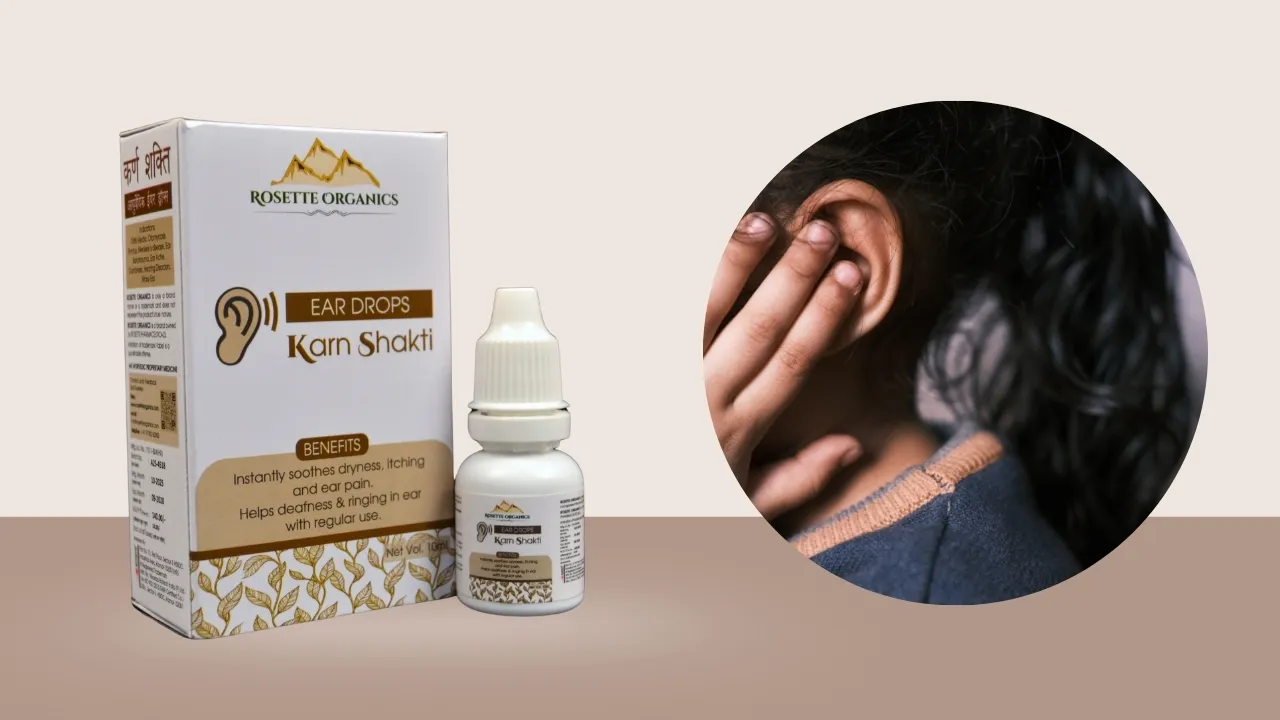
The base is Til Taila (sesame oil), yes, but it’s processed into a lightweight, non-greasy formula that penetrates quickly and doesn’t leave residue on your pillow or clog your ear canal.
The herbal blend does three things simultaneously. First, it soothes irritation from constant earbud friction or environmental dryness, calming aggravated Vata almost instantly. Second, it combats the dryness that leads to hard wax, itching, and that scratchy feeling inside your ear. Third, it addresses ringing and buzzing by nourishing Prana Vayu (the nerve communication pathway linked to hearing).
The formula includes Neem (a natural antimicrobial that prevents infection without harsh chemicals), Tulsi (holy basil, known for its anti-inflammatory and calming properties), and Kalonji (black seed, traditionally used for respiratory and ear-nose-throat health). Together, they create a Vata-balancing shield against modern ear stressors—gentle enough for daily use, powerful enough to make a difference.
Step-by-Step: How to Use Karn Shakti Drops Properly
Using Karn Shakti Drops isn’t complicated, but doing it right makes all the difference between relief and wasted product. Here’s the proper technique for herbal instillation:
- Shake the bottle gently before use. The herbal extracts can settle, so a quick shake ensures you’re getting the full blend in every drop.
- Tilt your head sideways so the affected ear faces upward. You can lie down on your side or simply tilt while sitting—whatever feels stable and comfortable.
- Gently pull your earlobe outward and slightly downward. This straightens the ear canal and allows the drops to travel deeper without pooling at the entrance.
- Instill 2–3 drops directly into the ear canal. Don’t overfill—more drops won’t speed up relief, they’ll just spill out and create mess.
- Stay in this tilted position for 3–5 minutes. This gives the herbal formula time to coat the canal, reach the eardrum area, and start working on dryness and irritation. Resist the urge to get up immediately.
- Wipe away any excess with a clean tissue, then repeat on the other side if needed. For daily ear hygiene and Vata balance, use once a day, preferably at night. During periods of heavy headphone use, dryness, or ringing, you can use it twice daily until symptoms ease.
Ayurvedic vs. Chemical Ear Drops – Which Is Safer?
Not all ear drops are created equal. When you’re standing in front of a pharmacy shelf debating between a chemical ear drop and an Ayurvedic formula like Karn Shakti Drops, here’s what you’re actually choosing between:
| Feature | Karn Shakti Drops (Herbal) | Chemical Ear Drops |
|---|---|---|
| Base | Herbal infusion in light sesame oil carrier | Antibiotics, glycerin, steroids, or hydrogen peroxide |
| Fragrance | Natural herbal scent, no synthetic irritants | Strong chemical or medicinal smell that lingers |
| Risk Profile | Gentle and safe for long-term use, no known ototoxicity | Risk of ototoxicity (inner ear damage), skin thinning with steroid overuse, antibiotic resistance |
| Best for | Dryness, itchiness, ringing (Karnakandu), Vata imbalance, preventive ear care | Acute bacterial infections, severe inflammation, post-surgical care |
| User Type | Office workers, frequent travelers, teens with headphone fatigue, elderly with age-related dryness | Short-term medical use only, under ENT supervision |
| Daily Use | Safe for routine ear hygiene | Risky without medical advice; can disrupt ear’s natural microbiome |
Ingredients of Karn Shakti Drops – Why They Matter
Every ingredient in Karn Shakti Drops is chosen not just for tradition, but for function. Here’s what’s actually working inside your ear canal when you use this formula:
- Neem (Azadirachta indica) – Nature’s antibacterial powerhouse that purifies the ear canal without synthetic harshness, keeping microbial overgrowth in check while respecting your ear’s natural flora.
- Tulsi (Holy Basil) – A potent anti-inflammatory agent that calms aggravated Vata and cools excess Pitta, ideal for ears that feel hot, irritated, or overstimulated from constant noise.
- Kalonji (Black Seed / Nigella sativa) – Traditionally used for tinnitus and ear-nose-throat complaints, its warming quality addresses deep-seated dryness and nerve irritation that causes ringing.
- Tea Tree (Melaleuca alternifolia) – Brings soothing, cooling, and antimicrobial properties to calm inflamed tissues without stinging or burning.
- Ginger + Oregano – This duo eases discomfort and adds antimicrobial protection; ginger balances Vata while oregano acts as a natural preservative.
- Sesame Oil (Til Taila) base – Deeply Vata-pacifying, it counteracts dryness and enhances absorption of all herbal extracts, carrying them deeper where they’re needed most.
Final Thoughts
Karn Shakti Drops isn’t about quick fixes—it’s about restoration. It takes Ayurveda’s ancient understanding of ear health and delivers it in a form designed for tech-age fatigue. Easy to use, it fits seamlessly into any lifestyle, whether you’re working from home or commuting with earbuds. Make it part of your self-care routine. Your ears have been listening all day—now it’s time to nourish them back.
FAQs
Q1: Can it be used daily?
Ans: Yes, very safe for daily hygiene.
Q2: Does it help with tinnitus?
Ans: Yes, herbs like Kalonji and Tulsi are traditionally used for ringing and nerve irritation.
Q3: Is it suitable for kids?
Ans: Only above 12 years – consult a doctor for younger children.
Q4: Any side effects?
Ans: None reported; formulated with gentle, non-irritating herbs.
Q5: How long to see results?
Ans: Usually within 3–5 days of regular use for dryness and discomfort relief.