
Loss of appetite means not feeling hungry or not having the desire to eat as usual. It is a common issue that many people experience at some point, especially during stress, illness, or changes in daily routine.
In many cases, it is also linked with digestion problems or irregular lifestyle habits like poor eating timing or lack of proper rest. While it may seem minor at first, ignoring it for long can affect overall health. In this article, you will learn simple and practical ways to improve appetite naturally.
What is Loss of Appetite?
Loss of appetite is a condition where a person does not feel hungry or has a reduced desire to eat food. It may happen suddenly or develop slowly over time, depending on the cause.
In simple terms, it means “not feeling hungry” even when the body needs nutrition. In medical terms, this condition is also called anorexia, which is different from the eating disorder anorexia nervosa. It is usually a sign that something in the body, such as digestion or overall balance, is not working properly.
Common Reasons for Loss of Appetite
There are several everyday factors that can reduce your hunger and affect your eating pattern.
- Stress or anxiety: Mental pressure or emotional imbalance can reduce the natural urge to eat.
- Digestive issues: Problems like gas, bloating, or slow digestion can make you feel full and uncomfortable.
- Illness or infection: Fever, cold, or other infections often lower appetite temporarily.
- Weak metabolism: When the body’s digestion and energy process is slow, hunger signals also decrease.
- Irregular eating habits: Skipping meals or eating at random times can disturb the body’s natural hunger cycle.
How to Improve Appetite Naturally
Improving appetite does not always require complex steps. Simple daily habits can help the body regain its natural hunger signals.
- Eat small frequent meals: Instead of large meals, have smaller portions 4–5 times a day to avoid feeling too full.
- Stay hydrated: Drinking enough water supports digestion, but avoid drinking too much just before meals.
- Light physical activity: Gentle activities like walking or stretching can help stimulate hunger naturally.
- Maintain meal timing: Eating at the same time every day helps the body develop a regular hunger pattern.
- Add spices and herbs: Ingredients like jeera, ajwain, and ginger can support digestion and improve appetite.
- Choose easy-to-digest foods: Light and simple foods are easier on the stomach and help maintain interest in eating.
- Create a calm eating environment: Eating without distractions and in a relaxed setting can improve focus on meals.
- Get enough rest: Proper sleep helps balance body functions, including hunger and digestion.
Natural & Ayurvedic Ways to Improve Appetite
Ayurveda focuses on improving digestion to naturally increase appetite. When digestion becomes balanced, the body starts sending proper hunger signals again. Simple herbs commonly used in daily life can support this process in a gentle and natural way without putting extra stress on the body.
- Jeera (Cumin): Helps improve digestion and supports better absorption of nutrients.
- Ajwain (Carom seeds): Reduces gas and bloating, making the stomach feel lighter.
- Saunf (Fennel): Calms the digestive system and helps in reducing heaviness after meals.
- Pudina (Mint): Provides a cooling effect and supports overall stomach comfort.
- Amla (Indian Gooseberry): Supports digestion and helps maintain overall body balance.
Ayurvedic Syrup for Appetite Support
Ayurvedic formulations often use a blend of natural herbs that work together to support digestion and improve appetite. When digestion becomes smoother, the body starts responding with better hunger signals. This natural approach focuses on balancing the digestive system rather than forcing appetite, making it a gentle and effective option for daily use.
To understand different herbal options in detail, you can explore some of the best Ayurvedic medicine to increase appetite.
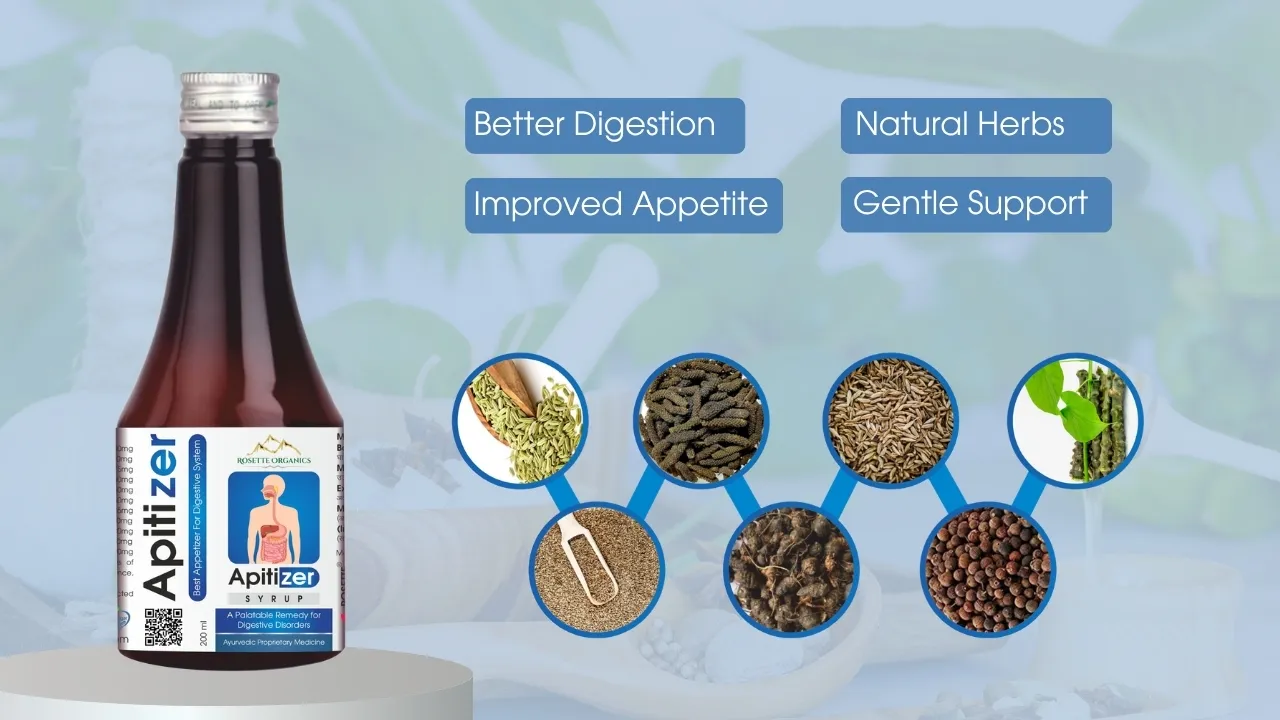
- Supports healthy digestion and reduces discomfort.
- Helps improve natural hunger signals.
- Made with herbal and natural ingredients.
- Suitable for regular use as a supportive option.
For those looking for additional support, one option is an appetite booster syrup, which contains a combination of herbs designed to support digestion and help the body absorb nutrients more effectively.
What to Eat When You Have Low Appetite
When your appetite is low, choosing the right type of food becomes important. Light, easy-to-digest, and nutrient-rich foods can help the body accept food without feeling heavy. Instead of forcing large meals, it is better to focus on simple options that are gentle on the stomach and still provide energy and nutrition.
| Food Type | Example |
|---|---|
| Light foods | khichdi, soup |
| Fruits | banana, apple |
| Drinks | buttermilk, juice |
| Snacks | dry fruits |
When to See a Doctor
If loss of appetite continues for a long time or starts affecting your overall health, it is important to seek medical advice. Ignoring it may lead to weakness and other health issues over time.
- Long-term appetite loss.
- Sudden weight loss.
- Constant weakness or low energy.
If symptoms persist or feel severe, consulting a doctor can help identify the exact cause and ensure proper care.
FAQs
Q1: How do I get my appetite back?
Ans: You can improve appetite by eating small meals, staying active, and maintaining a regular eating routine. Natural methods and digestive support can also help.
Q2: How to improve appetite naturally?
Ans: Simple habits like proper meal timing, light exercise, and using digestive herbs can support appetite naturally. A balanced lifestyle plays a key role.
Q3: What is the best treatment for loss of appetite?
Ans: Treatment depends on the cause, but it usually includes diet changes, lifestyle improvements, and supportive remedies. In some cases, medical advice may be needed.
Q4: What should I eat when I have no appetite?
Ans: Choose light, easy-to-digest foods like soups, fruits, and simple meals. Nutrient-rich liquids and small snacks can also help maintain energy.
Q5: Which vitamins help increase appetite?
Ans: Deficiencies in vitamins like B12 and certain nutrients may affect appetite. A balanced diet or proper guidance can help restore normal hunger.
Q6: Can loss of appetite be cured?
Ans: In most cases, appetite improves once the underlying cause is addressed. Simple lifestyle and dietary changes can make a noticeable difference.
Q7: How long does loss of appetite last?
Ans: It can last a few days during illness, but if it continues for a long time, it may need attention. Duration depends on the cause.
Q8: What supplements or remedies can support appetite?
Ans: Natural remedies and herbal formulations that support digestion may help improve appetite. It’s best to choose options that suit your body and needs.
Conclusion
Loss of appetite is often linked to simple factors like digestion, lifestyle, or temporary health issues. By making small changes such as improving eating habits, adding natural remedies, and maintaining a balanced routine, appetite can gradually return. Along with these steps, using supportive herbal options can also help. Focusing on a natural and consistent approach is the key to improving appetite in a safe and steady way.
If You are looking for additional support, using a natural appetite booster syrup can be a simple option to help improve digestion and restore appetite