That heavy, uncomfortable feeling when your stomach just won’t clear — most people stay quiet about it, but nearly 1 in 5 Indians deal with constipation regularly. Hard stools, bloating, straining every morning — it drains your energy before the day even begins.
The good news is that Ayurveda has worked with this problem for centuries, and today several of its herbs have actual clinical research backing them — not just tradition. If you are looking for a reliable ayurvedic medicine for constipation, Rosette Organics Novalax-H brings the most trusted of these herbs together in one simple powder.
What Is Constipation — And When Should You Take It Seriously?
Constipation is one of those problems people brush off until it starts affecting their daily life. Understanding what it actually means — and spotting the signs that need attention — is the first step toward managing it the right way.
What Actually Counts as Constipation?
Most people think skipping a day means they are constipated — but that is not quite right. Doctors use a simple set of guidelines that define constipation as fewer than 3 bowel movements in a week, passing hard or lumpy stools, straining to go, or that frustrating feeling of not fully emptying out even after you do. If this keeps happening, it is classified as chronic constipation.
Why Constipation Is So Common in India
Indian lifestyle habits quietly set the stage for poor gut movement:
- Heavy reliance on maida-based foods and white rice strips the diet of natural fibre.
- Most people drink far less water than their body actually needs through the day.
- Long sitting hours at work with little physical movement slows down digestion.
- Stress and irregular sleep directly disrupt gut nerve signals and bowel rhythm.
- Skipping meals or eating at odd hours confuses the body’s natural elimination cycle.
Warning Signs — When to See a Doctor
Most constipation responds well to diet and lifestyle changes. But certain signs mean you should not wait:
- Blood in your stool — even a small amount needs a doctor’s attention right away.
- Constipation that has lasted more than 3 weeks without any improvement.
- Sudden unexplained weight loss alongside your constipation symptoms.
- Severe abdominal pain that comes with difficulty passing stool.
What Ayurveda Says About Constipation
Ayurveda does not just look at the symptom — it looks at why the gut stopped working smoothly in the first place. And the answer usually points to one thing: imbalance.
The Gut in Ayurveda — Vata, Ama & Agni
In Ayurveda, a force called Vata governs all movement in the body — including how food moves through your gut. When Vata becomes aggravated, the colon turns dry and sluggish, making stools hard and difficult to pass. At the same time, weak Agni (digestive fire) leaves food partially undigested, forming Ama — a sticky toxic buildup that clogs the gut channels and slows everything down further.
What Ayurveda Considers the Root Causes
- Eating at irregular times, skipping meals, or rushing through food.
- Regular consumption of dry, cold, or heavily processed foods that aggravate Vata.
- Ignoring or suppressing the natural urge to pass stool.
- Eating late at night combined with poor sleep — both directly weaken digestive fire.
Ayurvedic Herbs for Constipation — What Science Says
These herbs have been used in Ayurveda for gut health for centuries — but what makes them worth talking about today is that several of them have been studied in actual clinical trials. Here is what the research says, herb by herb.
- Isabgol (Plantago Ovata) — A natural fibre that absorbs water in the gut, forms a soft gel, adds bulk to stool, and helps it move through smoothly.
- Sanay (Cassia Angustifolia) — A stimulant herb that activates colon movement overnight, helping clear a blocked bowel naturally.
- Harad (Terminalia Chebula) — One of Ayurveda’s oldest digestive herbs, known to support gut motility and encourage regular, complete bowel emptying.
- Amaltas (Cassia Fistula) — A gentle laxative herb from the same plant family as senna but milder in action, supports easier stool passage.
- Saunf (Foeniculum Vulgare) — Fennel seeds that relax the gut muscles, relieve trapped gas, reduce bloating, and ease the cramping that comes with constipation.
- Mulethi (Glycyrrhiza Glabra) — Licorice root that soothes and protects the gut lining, reduces upper digestive discomfort, and supports a calmer digestive tract.
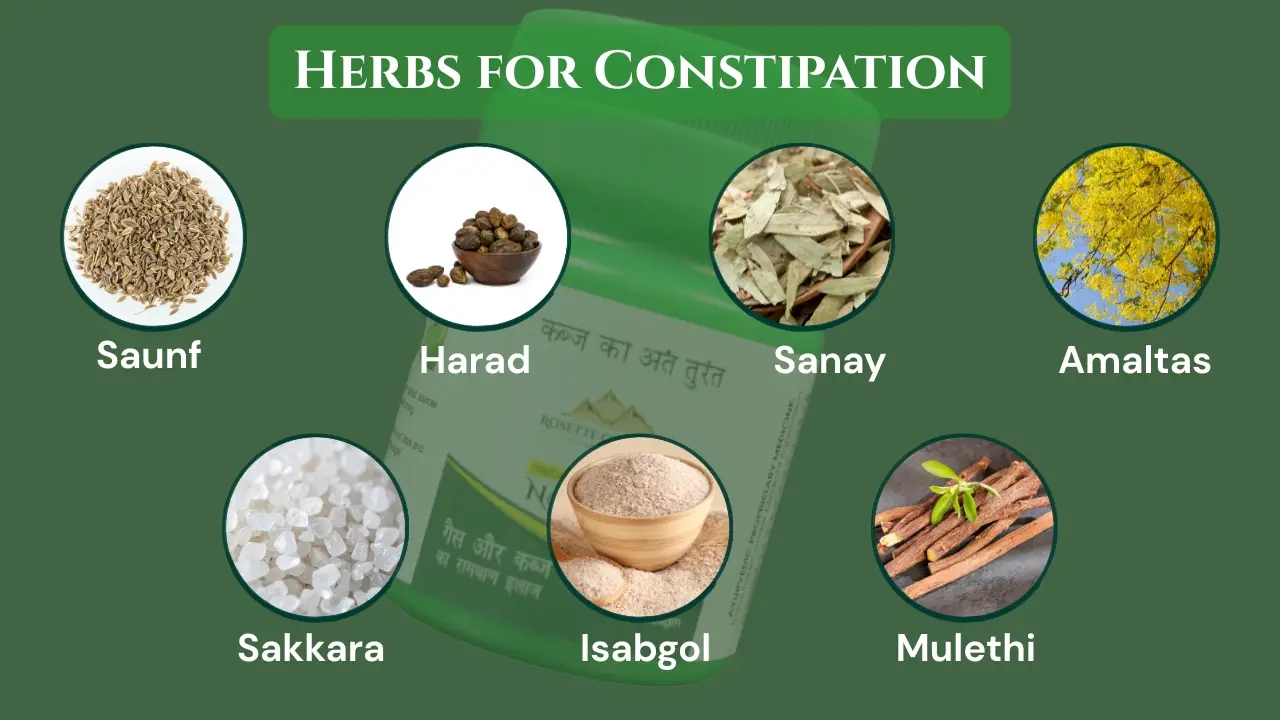
- Sakkara (Sucrose) — Natural sugar used as a base to make the powder palatable and easy to take daily.
| Herb | Main Role |
|---|---|
| Isabgol | Bulk-forming laxative |
| Senna (Sanay) | Stimulant laxative |
| Harad | Bowel regulator |
| Amaltas | Gentle laxative |
| Saunf | Gas & bloating relief |
| Mulethi | Gut lining soother |
Indian Diet for Constipation — What to Eat and What to Avoid
What you eat three times a day either helps your gut or works against it. The good news is that an Indian kitchen already has most of what your digestive system needs — you just have to know what to reach for.
Foods That Support Smooth Bowel Movement
- Papaya — contains natural digestive enzymes and soluble fibre that soften stool and keep things moving.
- Lauki (bottle gourd) — has very high water content that keeps the intestines hydrated and prevents hard stools.
- Moong dal — easy on the stomach, provides gentle fibre that supports regular bowel movement without causing gas.
- Ghee with warm milk at night — a teaspoon of ghee in warm milk before bed lubricates the gut lining and eases morning elimination.
- Oats — rich in soluble fibre that slows digestion in a good way, softening stool consistency over time.
- Chaas (buttermilk) — natural probiotics in chaas support healthy gut bacteria which directly affect bowel regularity.
Foods That Make Constipation Worse
- Maida and refined flour products — processing strips out all natural fibre, leaving nothing for the gut to work with.
- Fried and heavily processed food — slows down gut movement and adds no digestive value.
- Excess white rice — low in fibre and can firm up stools when eaten in large amounts regularly.
- Cold drinks and packaged juices — full of sugar with zero fibre, and the cold temperature can disrupt gut motility.
- Red meat — takes significantly longer to digest and can slow the entire bowel cycle.
| Eat More | Avoid |
|---|---|
| Papaya, guava, pears | Maida, white bread, biscuits |
| Lauki, tinda, karela | Fried samosas, pakodas, chips |
| Moong dal, masoor dal | Instant noodles, packaged snacks |
| Ghee (1 tsp) in warm milk at night | Cold drinks, packaged juices |
| Oats, dalia, barley | Excess white rice |
| Chaas, curd at room temperature | Red meat, processed meats |
Small Lifestyle Changes That Help More Than You Think
Herbs and diet do most of the work — but your daily routine either supports them or cancels them out. These five habits cost nothing and make a real difference.
- Walk 20–30 minutes every day — even a simple walk after meals stimulates colon contractions and keeps gut movement regular.
- Drink 2 glasses of warm water first thing in the morning — on an empty stomach, this gently activates the bowel and prepares it for the day.
- Eat dinner before 8 PM — late meals leave food sitting in the gut overnight with nowhere to go, slowing everything down.
- Sleep by 10:30 PM — your gut follows a circadian rhythm, and bowel motility naturally peaks in the early morning hours only when sleep is on time.
- Take stress seriously — chronic stress directly interferes with gut nerve signals through the gut-brain axis, and no amount of fibre will fix constipation that stress keeps triggering.
Novalax-H Powder — All These Herbs in One Formula
Every herb covered in this article has its own role in supporting digestive comfort — but sourcing and taking each one separately is not practical for most people. Rosette Organics Novalax-H brings all of them together in one ayurvedic churna for constipation that is simple to take every night.
What is inside:
- Isabgol (Plantago Ovata) — bulk-forming fibre for smooth bowel movement.
- Sanay / Senna (Cassia Angustifolia) — natural stimulant laxative.
- Harad (Terminalia Chebula) — traditional bowel regulator.
- Amaltas (Cassia Fistula) — gentle laxative support.
- Saunf (Foeniculum Vulgare) — relieves gas and bloating.
- Mulethi (Glycyrrhiza Glabra) — soothes the gut lining.
- Sakkara (Sucrose) — base for palatability.
How to take Novalax-H:
Dose: 1–2 teaspoons at bedtime For: Adults and children above 12 years Method: Use a dry spoon to measure — add to a clean tumbler — fill with water — stir briskly — drink at once Important: Always follow with one full glass of plain water As directed by physician.
Conclusion
Constipation is common — but it does not have to be your everyday reality. The herbs covered here are not just ancient remedies passed down through generations; several of them have real clinical research supporting their role in managing constipation naturally. Paired with the right diet and simple daily habits, they give your gut a genuine chance to find its rhythm again. If you want one formula that brings all of this together, Try Novalax-H Powder.
FAQs
Q1: How can I relieve constipation quickly?
Ans: Drink 2 glasses of warm water on an empty stomach every morning and take isabgol with water at bedtime — results usually show within 12–24 hours. A short walk after meals also helps stimulate bowel movement naturally.
Q2: What are 5 symptoms of constipation?
Ans: Fewer than 3 bowel movements a week, hard or lumpy stools, straining while going, a feeling of incomplete emptying, and persistent bloating or heaviness in the lower abdomen.
Q3: What foods help with constipation?
Ans: Papaya, guava, moong dal, lauki, oats, and chaas are among the best foods for constipation — all high in fibre or probiotics that support regular bowel movement.
Q4: What foods cause constipation?
Ans: Maida-based foods, fried snacks, excess white rice, cold drinks, and red meat are the main foods that cause constipation — all low in fibre and slow down gut movement.
Q5: Is it normal to not poop for 7 days?
Ans: No — going more than 3 days without a bowel movement is already constipation. Seven days is concerning and needs medical attention if it happens regularly.
Q6: How do I know if my constipation is serious?
Ans: Watch for blood in the stool, constipation lasting more than 3 weeks, sudden weight loss, or severe abdominal pain — these are danger signs that need a doctor.
Q7: What happens if constipation is left untreated?
Ans: Untreated constipation can lead to haemorrhoids, anal fissures, and in severe cases faecal impaction — along with persistent bloating and reduced appetite over time.
Q8: Which fruit is best for constipation?
Ans: Papaya is the best fruit for constipation — it contains the digestive enzyme papain plus soluble fibre that softens stool quickly. Guava, pears, and figs are also effective.
Q9: Which ayurvedic churna is best for constipation?
Ans: A good constipation churna combines fibre, stimulant herbs, and gut-soothing ingredients — Rosette Organics Novalax-H brings all of these together in one daily formula.