Most people find out they have fatty liver during a routine ultrasound — not because they felt sick, but because it rarely shows symptoms until it has already progressed. What makes this more concerning is that fatty liver now affects roughly 1 in 3 adults worldwide, and poor diet, stress, and inactivity are driving those numbers up every year.
The good news is that fatty liver can be reversed — especially in the early stages — and Ayurveda has a well-researched approach to doing exactly that. In this guide, you will find out what fatty liver actually is, which Ayurvedic herbs have real science behind them, what to eat and avoid, and how Rosette Organics O-Gem-DS Syrup supports natural liver recovery from within.
What Is Fatty Liver — And Why Should You Take It Seriously?
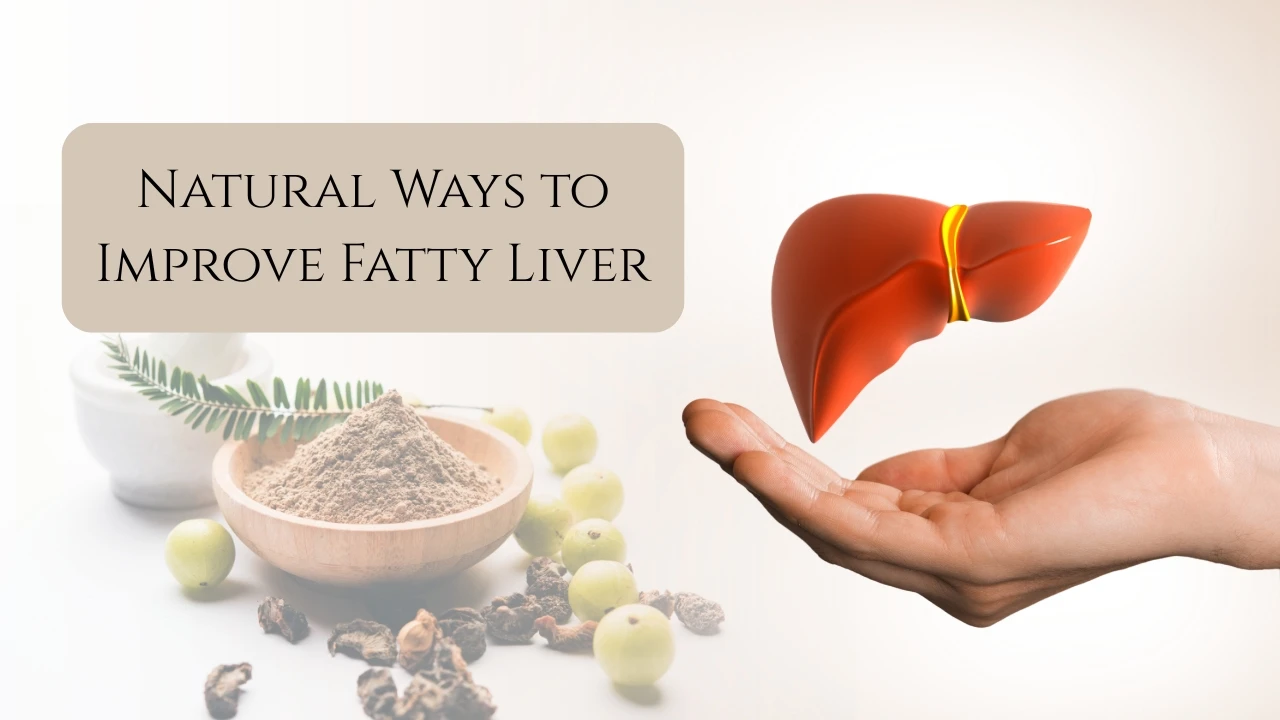
Your liver is one of the hardest working organs in your body — filtering toxins, processing nutrients, and regulating metabolism all at once. Fatty liver, or hepatic steatosis, happens when fat makes up more than 5 to 10 percent of the liver’s total weight.
At that point, the liver starts struggling to do its job properly. What makes NAFLD (Non-Alcoholic Fatty Liver Disease) particularly tricky is that most people feel completely fine in the early stages — no pain, no obvious symptoms — until a routine ultrasound reveals the problem.
What the Grades Actually Mean
Not all fatty liver is the same. Doctors grade it based on how much fat has built up and how much damage has occurred:
| Grade | What It Means | Can It Be Reversed? |
|---|---|---|
| Grade 1 — Mild | Small amount of fat, liver still functioning well | Yes — lifestyle changes alone can fix this |
| Grade 2 — Moderate | More fat with some inflammation beginning | Yes — with consistent diet, movement, and herbal support |
| Grade 3 — Severe | Significant scarring and advanced damage | Harder — needs medical supervision alongside natural support |
What Is Causing It?
- Eating too much fried food, sugar, and refined carbs regularly
- Sitting most of the day with little physical movement
- Excess belly fat — visceral fat directly stresses the liver
- Diabetes and insulin resistance — the liver converts excess blood sugar into fat
- Regular alcohol intake — even in moderate amounts adds to fat accumulation over time
Fatty liver — especially at Grade 1 and Grade 2 — is one of the few liver conditions that can genuinely be reversed. Many people searching for ayurvedic treatment for fatty liver are at exactly this stage, where natural support can make a real difference. Ayurveda has been working with liver health for thousands of years, and modern research is now confirming what traditional medicine has long understood.
What Ayurveda Says About Fatty Liver
Long before ultrasounds and liver function tests existed, Ayurvedic physicians understood that the liver was central to how the body processes everything it takes in.
The Liver in Ayurveda — Yakrit
In Ayurveda, the liver is called Yakrit and is considered the primary seat of Pitta dosha. Pitta governs transformation in the body — metabolism, digestion, and the conversion of food into energy. When Pitta becomes aggravated, usually through poor diet, alcohol, stress, or irregular eating, the digestive fire (Agni) weakens. Food does not get processed properly and instead turns into Ama — a sticky toxic residue that accumulates in the liver and disrupts its normal function.
What Ayurveda Considers the Root Causes
- Weak Agni — when digestion is sluggish, unprocessed food turns into Ama and burdens the liver.
- Eating too late, skipping meals, or overeating — all directly disrupt Pitta balance.
- Excess oily, spicy, or heavy food — overloads the liver’s processing capacity.
- Chronic stress and poor sleep — two of the biggest Pitta aggravators that most people overlook.
Ayurvedic support for fatty liver does not focus on the liver alone. It asks why the liver is struggling in the first place — and then uses herbs, diet, and daily habits to address that root cause rather than just manage what shows up on a test report.
Ayurvedic Herbs for Fatty Liver — What Science Says
Most people assume Ayurvedic herbs are just traditional remedies with no real proof behind them. But several of these herbs have now been studied in labs and clinical trials — and the results are genuinely surprising. Here is what each herb does, explained in plain language.
Bhui Amla — The Most Proven Herb
Out of all the ayurvedic herbs for fatty liver, Bhui Amla (Phyllanthus niruri) has the strongest real-world evidence. A proper human clinical trial gave NAFLD patients this herb daily for 12 months. At the end of the trial, their liver fat had reduced and the liver had become less stiff — both confirmed through medical tests. This is not a traditional claim — it is a measured, documented result from an actual human study.
Kalmegh — Stops Fat From Building Up in the Liver
Think of fat entering the liver like water entering a room through a crack. Kalmegh (Andrographis paniculata) essentially seals that crack. Research showed that its active compound blocked a specific protein that carries fat into liver cells — which means less fat enters the liver in the first place. It also helped the liver’s natural defence system work better, reducing the oxidative damage that comes with fat accumulation.
Kutki — Reduced Liver Fat by Nearly 70%
Kutki (Picrorhiza kurroa) is one of the most directly studied herbs for fatty liver. In a research model, the amount of fat stored in the liver dropped by close to 70% with Kutki supplementation. What makes it particularly interesting is that it works in two ways — it stops the liver from absorbing fat AND stops it from producing new fat internally. A full-scale human clinical trial using MRI scans to measure liver fat is currently running.
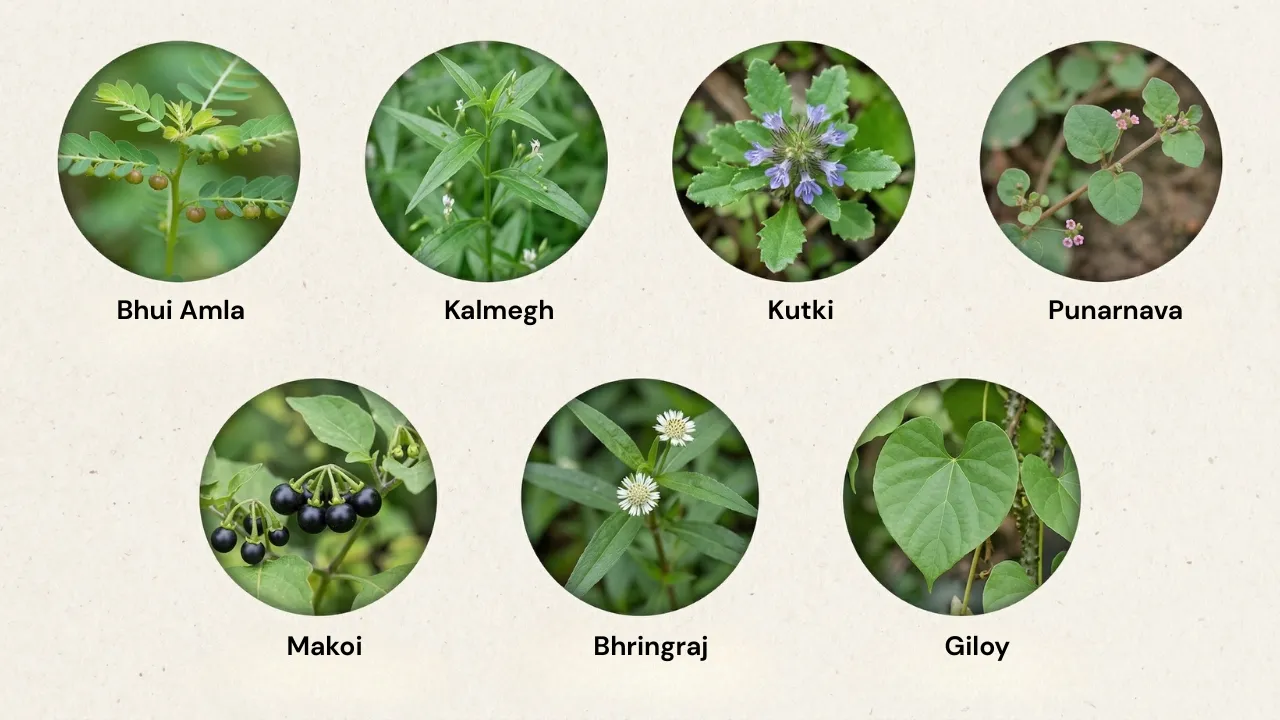
Punarnava — Helps Bring Liver Enzymes Back to Normal
When your liver is struggling, two enzymes — AST and ALT — go up in your blood test. High AST and ALT are usually the first sign doctors notice. Punarnava (Boerhavia diffusa) showed a clear reduction in both these enzymes in research studies. It also helps with bloating and water retention, which many people with fatty liver quietly deal with.
Makoi — Works on Liver Scarring
Makoi (Solanum nigrum) helped reduce fat levels in the blood and also improved liver scarring in a research model. Beyond that, it activated the body’s own natural defence system against liver damage — so the liver gets both short-term relief and better long-term protection.
Bhringraj — Helps Liver Cells Recover
Bhringraj (Eclipta alba) is known in Ayurveda as a liver rejuvenator. It reduced fat deposits in the liver and calmed down the immune cells that cause liver inflammation. Think of it as helping the liver repair itself after the damage has already begun.
Giloy — Effective, But Take It With a Doctor’s Guidance
Giloy (Tinospora cordifolia) showed real improvements in fat levels and liver enzymes. However, there have been some cases where Giloy caused liver stress rather than relieving it — particularly when taken in high doses without supervision. It works well as part of a balanced formula, but should not be taken alone without medical advice, especially if you already have a liver condition.
| Herb | What It Does |
|---|---|
| Bhui Amla | Reduces liver fat + stiffness |
| Kalmegh | Stops fat entering liver cells |
| Kutki | Cuts liver fat by ~70% |
| Punarnava | Lowers AST + ALT liver enzymes |
| Makoi | Reduces fat + liver scarring |
| Bhringraj | Helps liver cells repair |
| Giloy | Lowers fat + liver enzymes |
What to Eat and Avoid
No herb or supplement works well if the diet stays the same. Food is either helping your liver recover or making it work harder — there is no middle ground with fatty liver.
Foods That Support Liver Recovery
- Moong dal and masoor dal — light on digestion and easy for a stressed liver to handle.
- Lauki (bottle gourd) and karela (bitter gourd) — both are natural liver detoxifiers used in Ayurveda for centuries.
- Amla and lemon — rich in Vitamin C, which helps repair liver cells and reduce inflammation.
- Oats and brown rice — the fiber slows down fat absorption and keeps digestion moving.
- Haldi (turmeric) in warm water every morning — one of the simplest anti-inflammatory habits you can build.
- Plenty of water through the day — the liver needs it to flush out stored toxins properly.
What to Cut Out Completely
- Fried food — samosa, pakoda, puri — these go directly to the liver as fat
- Maida in any form — white bread, biscuits, noodles, and most packaged snacks
- Sugar — cold drinks, packaged juices, and mithai are among the biggest contributors to fatty liver
- Alcohol — even occasional drinking slows down liver recovery significantly
- Processed meats like sausage and salami — high in saturated fat and additives the liver struggles to clear
| Moong dal, lauki sabzi | Fried snacks, samosa |
| Amla juice, lemon water | Cold drinks, packaged juices |
| Oats, brown rice | White bread, noodles |
| Haldi milk, green tea | Alcohol |
| Karela, methi, palak | Sweets, chocolates |
Small Lifestyle Changes That Make a Big Difference
Herbs and diet do most of the work — but these daily habits determine how fast your liver actually recovers.
- Walk for 30 to 40 minutes every day — no gym needed, just consistent movement — this is the single most effective lifestyle change for fatty liver
- Sleep by 10:30 PM — in Ayurveda, the liver does its deepest detox work between 11 PM and 3 AM, and poor sleep directly interrupts that process
- Finish dinner before 8 PM — eating late keeps the liver busy digesting when it should be recovering
- Keep stress in check — chronic stress raises cortisol levels, which signals the body to store more fat around the liver
- Be careful with over-the-counter painkillers — even common ones like ibuprofen put extra pressure on the liver when taken regularly without guidance
Most people with Grade 1 fatty liver start seeing real improvement in their ultrasound reports within 3 to 6 months of following these changes consistently. Grade 2 typically takes 6 to 12 months. The key word is consistent — not perfect, just regular.
FAQs
Q1: What are the main causes of fatty liver?
Ans: Poor diet, excess sugar, fried food, low physical activity, obesity, and diabetes are the most common causes. Alcohol adds to it, but most cases in India are non-alcoholic.
Q2: Is fatty liver very serious?
Ans: Grade 1 and 2 are very manageable — but if ignored, it can progress to Grade 3 or cirrhosis. Early action makes all the difference.
Q3: What exercise is good for fatty liver?
Ans: Brisk walking for 30 to 40 minutes daily is enough. You do not need a gym — just consistent daily movement.
Q4: How do you flush fat out of your liver?
Ans: Cut fried food and sugar, drink plenty of water, add fiber-rich foods, and support your liver with Ayurvedic herbs like Bhui Amla and Kutki.
Q5: What foods are good for fatty liver repair?
Ans: Moong dal, lauki, karela, amla, oats, brown rice, and haldi water are among the best. These are easy to digest and actively support liver recovery.
Q6: Which fruit is best for fatty liver?
Ans: Amla is the top choice — its Vitamin C content directly supports liver cell repair. Lemon and papaya are also good additions to your daily routine.
Q7: How long does it take to improve fatty liver?
Ans: Grade 1 typically improves within 3 to 6 months with consistent diet and lifestyle changes. Grade 2 may take 6 to 12 months.
Is Ayurvedic Support for Fatty Liver Worth It?
Fatty liver is common — but it is also very much reversible, especially in the early stages. The herbs covered here are not just traditional remedies passed down through generations — several of them have real research backing their effects on liver fat, liver enzymes, and inflammation. If you want a simple daily habit that works from within, Rosette Organics O-Gem-DS Syrup brings all these key herbs together in one ready-to-use bottle.