

Human eyes are not designed for 8-hour screen marathons. But that’s exactly what modern work-from-home life demands—Zoom calls, spreadsheets, emails, and endless scrolling. Somewhere along the way, Our vision starts to blur. A mild burn creeps in. Blinking feels like rubbing sandpaper.
This is not just fatigue. It’s Digital Eye Strain, medically known as Computer Vision Syndrome (CVS)—a rising condition where prolonged screen use harms the ocular surface of oyur eyes. The tear film begins to break down, glands stop producing enough moisture, and dryness, redness, or grittiness follow.
While many rely on artificial tears for short-term comfort, more and more people are now turning to Ayurvedic eye drops for dry eyes. Why? Because synthetic drops only offer temporary relief. They don’t fix the deeper issues—tear film instability, inflammation, or weakened gland function.
That’s where Ayurveda steps in—not as an alternative, but as a complete eye care system that strengthens, restores, and heals from the inside out.
The Science of Our Eyes
Every time you blink, your eyes get covered with a thin layer of tears. This layer is called the tear film, and it keeps your eyes moist, smooth, and clear.
The Tear Film has Three Layers
The first is the lipid layer—it’s an oily cover that keeps your tears from drying up too fast. When this layer gets weak, your eyes lose moisture quickly, and dryness begins.
The second is the aqueous layer—it’s made mostly of water. It gives your eyes the nutrients they need and washes away dust. If this layer becomes thin, your eyes may feel irritated or start to burn.
The third is the mucin layer—it helps spread the tears evenly over your eyes. Without it, some parts of your eyes stay dry while others get too wet. This can make your vision blurry or make your eyes feel scratchy.
When any of these layers get damaged, your eyes can’t stay moist for long. Slowly, this leads to a condition called Xerophthalmia, or chronic dry eyes. It causes discomfort, redness, and sometimes even eye damage if ignored.
Today’s screen-heavy lifestyle—like working on laptops all day, staring at phones, or using AC rooms—makes this problem worse. The tear film gets weaker over time, and normal eye drops only give short-term relief. They don’t fix the real issue.
The Ayurvedic Perspective
In Ayurveda, dry eyes are not just seen as a local problem. They are considered a sign of inner imbalance—especially related to Vata and Pitta doshas. The condition is called Sushkakshipaka, where “Sushka” means dry, and “Akshi” means eyes.
Ayurveda explains that your eyes are governed by a type of energy called Alochaka Pitta, which controls vision and eye clarity. When this energy becomes disturbed, and when Vata dosha (which represents dryness and movement) increases, it leads to dryness, roughness, and discomfort.
Here’s how Ayurveda sees the root causes:
- Excess heat (Pitta imbalance) → Burning, redness, light sensitivity
- Excess dryness and wind (Vata imbalance) → Grittiness, rough feeling, poor tear flow
- Lack of eye nourishment (Rasa dhatu depletion) → Weak tear film, dull vision
- Stress or late-night screen use → Imbalance of mind-body rhythm affecting Netra Swasthya (eye health)
Instead of only treating symptoms, Ayurveda focuses on restoring balance. It uses cooling herbs to reduce heat, nourishing oils to calm dryness, and routines that support overall Netra Swasthya—the complete wellness of the eyes.
This approach doesn’t just bring short-term relief. It builds long-term strength in the eyes by balancing the inner energies that control tear flow, clarity, and comfort.
Inside Divya Drishti: The Healing Herbs
Divya Drishti is not just a regular eye drop. It’s made from a powerful mix of Ayurvedic herbs that work together to soothe, protect, and heal dry and irritated eyes—without using any chemicals. Each ingredient has a specific role in supporting your eye health.
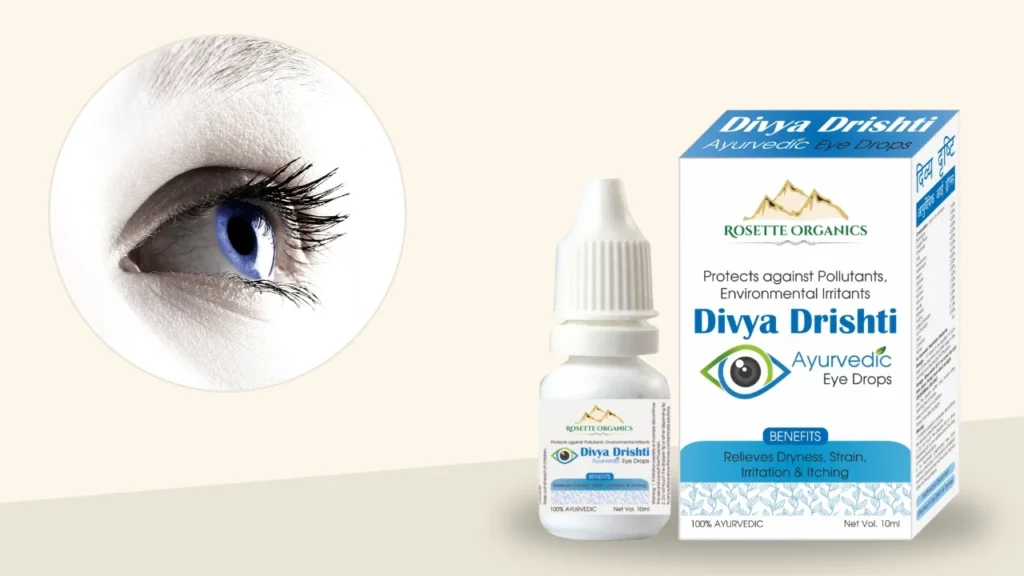
Triphala (Amalaki, Haritaki, Bibhitaki)
A classic Ayurvedic formula trusted for centuries:
- Amalaki (Amla): Rich in vitamin C; helps in repairing dry and inflamed eyes.
- Haritaki: Improves eye clarity and removes toxins.
- Bibhitaki: Supports tear film stability and natural cleansing of the eyes.
Together, Triphala balances all three doshas and acts as a full-spectrum eye protector.
Honey (Madhu)
- Works as a natural lubricant, keeping your eyes moist without chemicals.
- Has mild antimicrobial properties that protect your eyes from dust and allergens.
- Helps in gently soothing irritation and improving comfort.
Bhringraj & Gulab Phool (Rose Flower)
- Bhringraj cools down excess Pitta, reducing burning and redness.
- Gulab (Rose) gives a calming and refreshing feel to tired eyes.
- Together, they ease the heat buildup from long screen hours or exposure to sun and pollution.
Daruhaldi (Berberis) & Tulsi
- Daruhaldi is known for its anti-inflammatory and antimicrobial effects—protecting the eyes from airborne irritants like smoke and dust.
- Tulsi supports immunity and defends your eyes from pollution-related stress.
- Both herbs help in keeping the ocular surface clean and healthy.
These ingredients don’t just cover up the symptoms. They work at the root level—cooling the heat, calming dryness, and gently restoring balance. Divya Drishti supports Netra Swasthya (eye health) by combining ancient Ayurvedic knowledge with real-world problems like screen exposure, pollution, and lifestyle fatigue.
The Lifestyle Protocol
Using Ayurvedic eye drops works best when paired with healthy daily habits. Small changes in your routine can double the results—faster comfort, longer relief, and stronger eye health over time.
Here’s a simple lifestyle protocol you can follow:
Follow the 20-20-20 Rule
Every 20 minutes, look at something 20 feet away for 20 seconds. It gives your eyes a break and helps reduce Digital Eye Strain during screen-heavy work.
Start Your Day with Trataka
This is a yogic gazing practice. Light a candle or focus on a black dot on the wall, and stare without blinking for 1–2 minutes. It improves focus and supports Alochaka Pitta, the energy responsible for vision.
Do Eye Yoga (Chakshu Vyayama) Twice Daily
Simple exercises like:
- Eye rotation (clockwise & anti-clockwise)
- Side-to-side & up-down movement
- Palming (gently rubbing and placing warm palms over eyes)
These boost circulation and relax eye muscles.
Eat Vitamin A-rich foods
Include ghee, carrots, spinach, pumpkin, and amla in your meals. These support the tear film and help your eyes recover from dryness faster.
Apply Eye Drops at the Right Time
Morning and evening—after yoga or before bedtime—is the best time for using Divya Drishti, when your eyes are calm and ready to absorb herbs.
Just a few minutes a day can protect your eyes for years. Think of it as daily insurance for your vision.
Why Ayurvedic Drops Are Different
Here’s how natural eye drops like Divya Drishti compare with regular chemical-based options:
| Ayurvedic Eye Drops (e.g., Divya Drishti) | Chemical Eye Drops (with preservatives) |
|---|---|
| Made from natural herbs like Triphala, Tulsi, Gulab | Contain synthetic ingredients and additives |
| No preservatives like Benzalkonium chloride | Often include preservatives that may irritate the eyes |
| Focus on root-cause healing (Vata-Pitta balance) | Provide surface-level relief only |
| Safe for long-term daily use | Long-term use may lead to side effects |
| Support tear film repair and gland function | May cause dependency or rebound dryness |
| Gentle, cooling, and suitable for all age groups | Not always safe for children or sensitive eyes |
How to Use Divya Drishti Safely
Using Ayurvedic eye drops the right way is just as important as choosing the right product. Follow this simple routine to get the best results and avoid contamination.
Step-by-Step Application Guide:
- Wash your hands thoroughly with soap and water.
- Sit or lie down comfortably and tilt your head back slightly.
- Gently pull down your lower eyelid to create a small pocket.
- Use 1–2 drops of Divya Drishti in each eye.
- Close your eyes for 1–2 minutes. Don’t blink or rub.
- Do not touch the bottle nozzle to your eyes, hands, or any surface.
- Use only at bedtime, unless directed otherwise by a practitioner.
- Store the bottle in a cool, dry place. Keep it tightly closed.
This product is safe for children above 5 years, but under adult supervision. If your child is using screens for schoolwork, Divya Drishti can be a gentle and natural support for dry, tired eyes.
Conclusion
Dry eyes need more than just quick fixes. While chemical drops only give short-term relief, Divya Drishti Ayurvedic Eye Drops work gently to restore natural balance. With healing herbs, safe bedtime use, and a few lifestyle changes, your eyes get the care they truly deserve—calm, cool, and clear.
FAQs
Q1: Does it cause a burning sensation?
Ans: Mild cooling may be felt due to ingredients like alum and camphor, but it fades quickly.
Q2: Is it safe for kids?
Ans: Yes, it is safe for children above 5 years under adult supervision.
Q3: Can I use it with contact lenses?
Ans: Yes, but remove your lenses at least 15–20 minutes before using the drops.
Q4: Is it habit-forming?
Ans: No, it’s a non-addictive Ayurvedic Rasayana designed to support long-term eye health.