
Low porosity hair has cuticles that stay tightly closed, so even the best oils for low porosity hair struggle to get inside. The strands look smooth on the outside but quietly resist most products. This is why anything you apply—whether moisture or oil—often stays on the surface instead of moving deeper.
Why oils “sit” on low porosity hair
Oils stay on top because the cuticles don’t open easily. The strand already has a natural water-repelling layer, so oil forms a coating instead of absorbing. Heavy oils stay even longer, making the hair feel greasy on the outside.
India-specific signs: long drying time, greasy roots, poor absorption
In Indian weather, the signs become easy to spot: hair dries very slowly after washing, roots turn oily in humidity, and oiling makes the hair shiny but not nourished. Pollution and sweat increase buildup, so the strands feel coated quickly.
How cuticle tightness + hydrophobic layer block oils
The cuticles lie flat, leaving almost no space for oils to pass through. The outer lipid layer pushes oils away instead of letting them sink in. Only light, small-molecule oils or oils applied on damp hair can move past this barrier.
Why Most Oils Don’t Absorb on Low Porosity Hair
This slow absorption is the main reason many popular oils for low porosity hair feel heavy or greasy when applied on dry strands.
Why some oils enter and others don’t
Some oils are naturally light and thin. They move easily and don’t sit on the surface for long. But many common oils are thick and heavy, so they cannot pass through the tight outer layer of the hair. Think of it like trying to push a big object through a narrow gap — it just doesn’t fit.
Why some oils stay outside even if they are light
Absorption also depends on how well the oil “matches” your hair. Some oils blend well with the hair’s inner structure, so they slowly go inside. Others don’t match at all, so no matter how long you keep them, they will only sit on top. Mineral oil is an example — it always stays outside because the hair cannot “hold on” to it.
Why you must add water before adding oil
Low porosity hair naturally pushes oils away. The surface becomes even more resistant. But when hair is slightly wet, the outer layer becomes softer and more flexible. This gives the oil a small chance to enter. So “water first, oil later” is the only way to get any absorption.
Why buildup happens quickly in Indian weather
Indian heat, sweat, and pollution collect on the hair very easily. If the oil stays on the surface, it mixes with dust and hard water minerals. This creates a layer that feels sticky or rough. Because the hair is not absorbing anything, each new product adds another layer, making the hair feel heavy over time.
How to Choose the Right Oils for Low Porosity Hair
Finding the right oil becomes easier when you understand how different oils for low porosity hair behave. Since the hair doesn’t let most oils in, the best choice depends on whether the oil can enter the strand, stay on top, or do a bit of both.
Penetrating oils — internal moisturizers
These oils are light enough to move past the tight outer layer and reach inside the hair. They help soften the strand from within and make the hair feel smoother over time. These oils don’t sit heavily on the surface, so they are perfect for low porosity hair. Coconut oil, avocado oil, and argan oil are common examples because they slip in more easily when applied on damp hair.
Lightweight hybrid oils — thin surface film
Hybrid oils are not fully penetrating but not fully heavy either. They spread easily, give shine, and don’t make the hair greasy. They form a very thin layer on top, which keeps the hair soft without weighing it down. Grapeseed oil and jojoba oil fall in this category. These are great for everyday use, especially in Indian humidity where heavier oils can feel sticky.
Sealing oils — only for locking moisture after hydration
Sealing oils stay mostly on the surface. They are not meant to go inside the hair; instead, they help lock moisture in after the hair is already hydrated. These work best when you apply them at the end of your routine, not at the beginning. Sweet almond oil and certain herbal blends can work as sealers when the hair is damp.
Oils to avoid on dry hair (heavy & occlusive)
Thick or sticky oils become a problem when used on dry low porosity hair. They sit on top, attract dust, and make the hair feel greasy. Castor oil, olive oil, mustard oil, and pure mineral oil are good examples. If you want to use them, always dilute them with a lighter oil or warm them before use to avoid buildup and heaviness.
DIY Oils for Low Porosity Hair
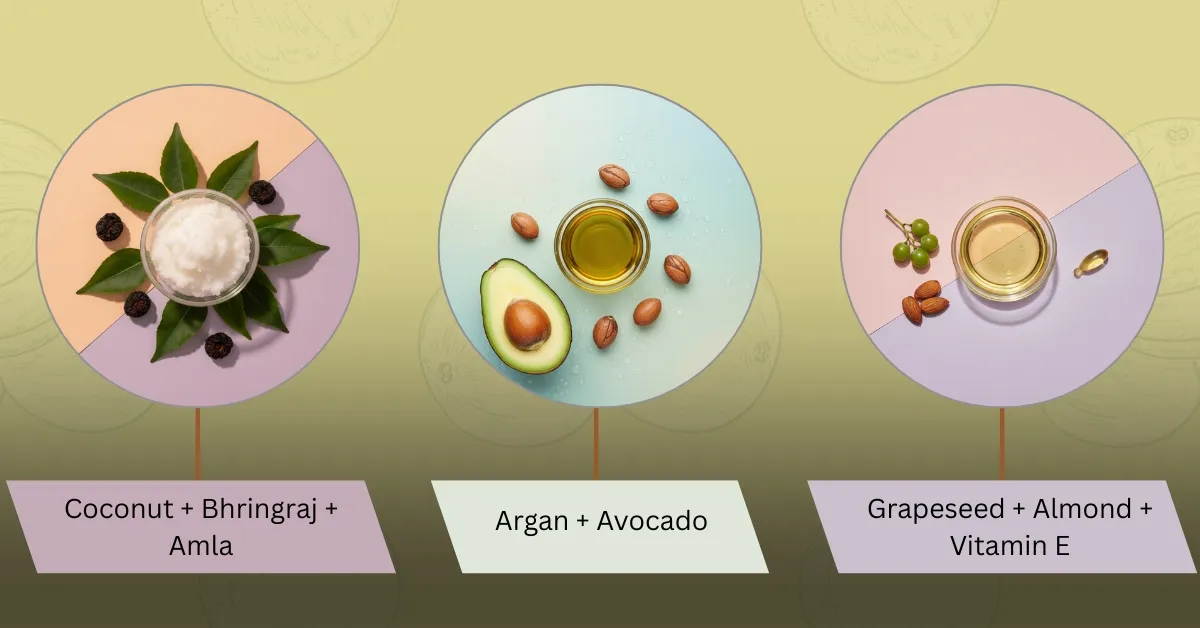
Simple blends work best for low porosity hair when they’re light, balanced, and easy to absorb. These mixes help you avoid heaviness while still giving the hair the nourishment it needs. The ratios below are designed so the oils don’t sit on the surface or become sticky.
Lightweight Daily Blend (Grapeseed + Almond + Vitamin E)
This blend is perfect for daily or every-alternate-day use because it stays light and doesn’t leave a greasy layer.
- Grapeseed oil – 2 parts
- Sweet almond oil – 1 part
- Vitamin E oil – 2 drops per tablespoon
Grapeseed keeps the mix thin, almond adds softness, and Vitamin E supports shine without making the hair heavy. This works well in hot or humid Indian weather where most oils feel too sticky.
Growth & Scalp Health Blend (Coconut + Bhringraj + Amla)
This blend supports stronger roots and a calmer scalp while staying comfortable for low porosity hair when applied on damp strands.
- Coconut oil – 2 parts (as the base)
- Bhringraj oil – 1 part
- Amla oil – 1 part
Coconut acts as the carrier, helping the herbal oils reach deeper layers. Bhringraj supports scalp nourishment, and Amla adds strength. Warming the mix slightly before use helps it spread better and prevents surface heaviness.
Anti-Frizz Monsoon Blend (Argan + Avocado)
This blend helps control frizz during rainy or humid seasons, especially in cities like Mumbai, Chennai, and Kolkata.
- Argan oil – 1 part
- Avocado oil – 1 part
Argan gives smoothness and shine, while avocado helps soften dry areas. Both are light enough to avoid buildup and give a clean finish even when the air is sticky.
Mistakes People Commonly Make While Using Oils for Low Porosity Hair
Low porosity hair needs a gentle, careful approach because the strands don’t absorb oils easily. Many everyday habits unintentionally make this even harder. Here are the most common mistakes seen across all hair routines.
Applying oil on dry hair
When the hair is completely dry, the outer layer stays tightly closed. Oil cannot move past it, so it remains on the surface and gives a greasy feel. Slightly damp hair allows the oil to spread and sink in better.
Using too much oil
Low porosity hair can only take in a small amount at a time. Applying more oil only builds up on the surface and makes the hair feel heavy. A small amount is usually enough for most lengths.
Using heavy oils without dilution
Thick oils stay on top because the strands cannot pull them in. When these oils are used alone, they create a coating that becomes sticky over time. Mixing them with a lighter oil helps them glide better and avoids buildup.
Coconut oil overnight in winter (becomes solid → poor absorption)
In colder weather, coconut oil turns firm on the hair instead of remaining fluid. This prevents absorption and forms a hard layer. Warming the oil lightly or applying it on damp hair helps avoid this issue.
Not clarifying buildup caused by pollution, products, and minerals
When oils stay on the surface, they easily mix with dust, sweat, product residue, and mineral deposits from water. Without regular clarifying, this buildup blocks moisture further. A gentle clarifying wash every couple of weeks keeps the hair fresh and responsive.
Before/After: How Long Oils Take to Work
Low porosity hair responds slowly because it absorbs moisture and oils at its own pace. You won’t see dramatic overnight changes, but small, steady improvements begin to show week by week.
Week 1 – absorption improvement
During the first week, the hair starts to accept small amounts of oil, especially when applied on damp strands. It may feel softer near the ends, and the surface coating begins to lessen. This is usually the stage where the hair stops rejecting everything you apply.
Week 2 – frizz + shine
By the second week, the hair becomes smoother. Frizz begins to reduce because the strands finally hold a bit of moisture. A natural shine appears—not oily shine, but a healthy, light glow that comes from better surface hydration.
Week 4 – breakage reduction
Around the fourth week, you may notice fewer broken strands while detangling. With regular, light oiling and proper moisture layering, the inner structure becomes more flexible. This makes the hair less prone to snapping or breaking when brushed or styled.
Why internal moisture changes take 30–45 days
Low porosity hair needs time because the cuticles open slowly, and the strands hold onto moisture gradually. Internal changes depend on consistent hydration followed by light oil. It usually takes about a month for the hair to adjust, absorb better, and show deeper improvements. This slow pace is normal and expected for this hair type.
Conclusion
Low porosity hair responds best when you give it moisture first and oil second. Lightweight oils make the biggest difference because they don’t sit on the surface or create buildup. When the hair is slightly damp, even a few drops spread better, absorb better, and support long-term softness. With a gentle routine, consistent hydration, and oils that stay light and simple, the hair becomes smoother, calmer, and easier to manage over time.
FAQs
Q1: Which oil is best for low porosity hair?
Ans: Light, fast-absorbing oils like argan, grapeseed, and sweet almond work best because they don’t sit on the surface.
Q2: Is coconut oil good for low porosity hair?
Ans: Yes, but only on damp hair or when slightly warmed so it doesn’t become heavy.
Q3: Which Indian oil gives the fastest results?
Ans: Coconut-based herbal blends with Amla or Bhringraj soften the hair quickly and support scalp health.
Q4: Why does my hair stay greasy after oiling?
Ans: Low porosity hair doesn’t absorb easily, so oil remains on top and creates a greasy layer.
Q5: How often should I oil low porosity hair?
Ans: 1–2 times a week is enough. A small amount works better than a heavy application.
Q6: Can I use Bhringraj oil if I have low porosity hair?
Ans: Yes. Apply it on damp hair or mix it with a lighter oil so it spreads better.
Q7: Best oil for men’s low porosity hair?
Ans: Grapeseed, almond, or argan oil — these stay light, feel clean, and don’t make the hair greasy.


